Guide
What is a virtual influencer? Meaning, the three types, examples, revenue, and how individuals make one (2026)
A virtual influencer is an SNS account starring a person who doesn't exist, made with graphics or AI. Three types, examples, revenue, how individuals make one.
LILIT 팀 · September 22, 2026
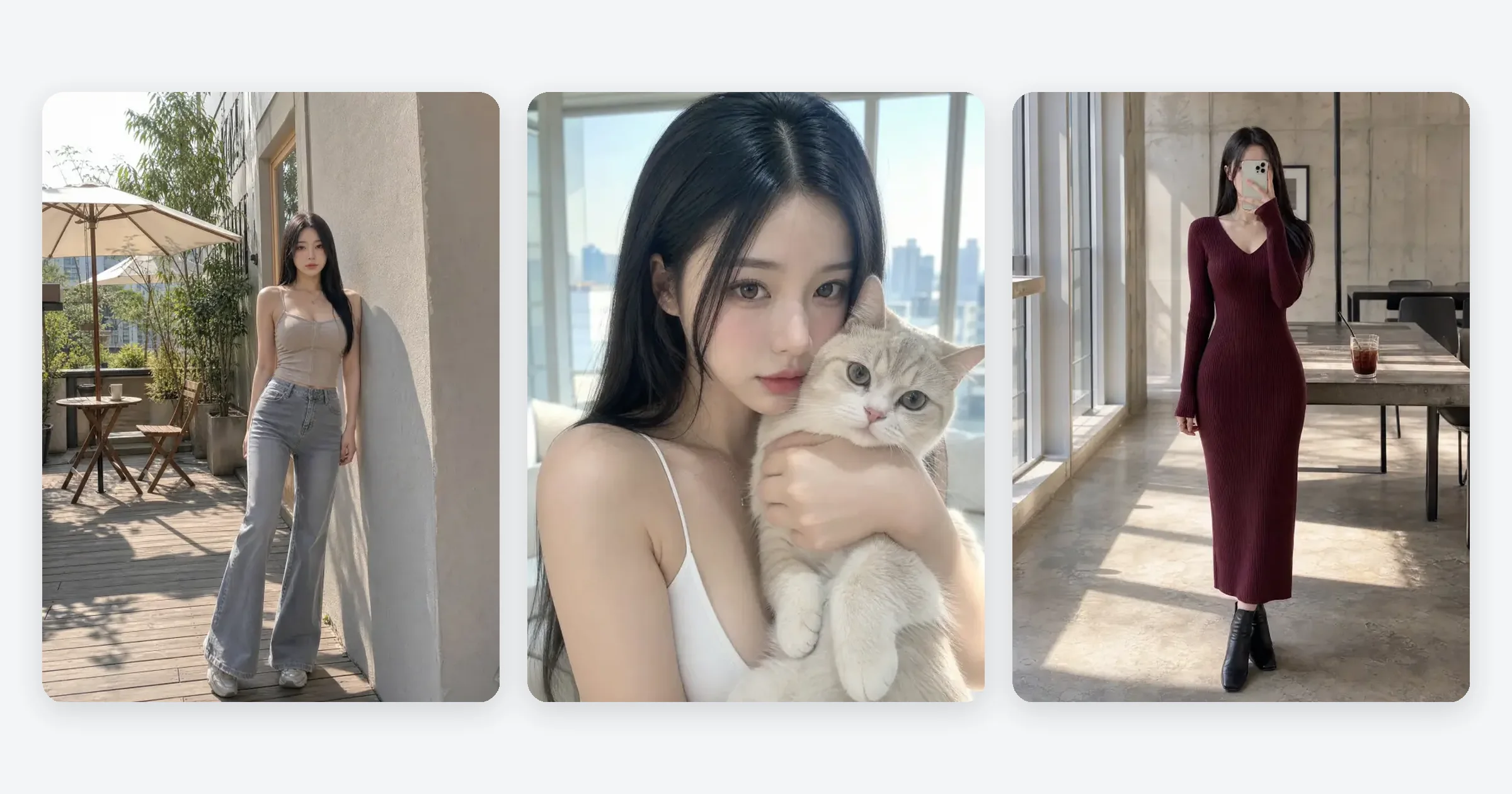
A virtual influencer is an account built around a person who doesn't actually exist: the person is made with 3D graphics or AI, then posts photos on SNS and appears in ads the way a human influencer does. The terms virtual influencer and AI influencer are both used for these accounts. Back in 2020, when Rozy first appeared in Korea, the phrase "virtual human" was more widely used.
Since then the range this word covers has widened a lot. Today the same name is used for a 3D character run by a studio team, a virtual idol moved from behind the scenes by real members, and an account where one person makes a single face with AI and runs it alone. This post separates the three types first, then goes through well-known examples in Korea and abroad, why companies want virtual influencers and the controversy around them, how the revenue works, and how an individual makes one. The examples and the revenue section are based on published reports and announcements. The section on making one yourself carries the numbers from an account the LILIT team runs.
The three types of virtual influencer
There's one name, but they split into three by how they're made and who runs them.
Studio-made. A professional studio builds the person in 3D graphics, and a team runs the account. Rozy in Korea and imma in Japan are the best-known cases. Every single photo goes through graphics work, so it takes a lot of people and a lot of money.
Idol-type. What you see on screen is a character, but there are real members behind it. The members move the character with motion capture equipment and sing themselves. PLAVE works this way.
Individual AI-type. One face is generated with AI and locked in, and one person makes photos with that face and posts them. Most of the accounts starting up lately belong to this type.
Here are the neighboring terms as well. "Virtual human" is the broader word that covers all three. "AI influencer" often refers only to the third one, the individual AI-type.
Well-known examples in Korea and abroad
Here are the five cases that come up most often in search.
| Name (Country · Maker) | Start | Known record |
|---|---|---|
| Rozy (Korea · Sidus Studio X) | Started on Instagram in August 2020, revealed as a virtual person in December | Reported $850,000 (about ₩1 billion) in ad revenue in 2021, more than 100 sponsorship projects |
| Lil Miquela (United States · Brud) | 2016 | About 2.27 million Instagram followers as of August 2026 |
| imma (Japan · Aww) | 2018 | Works as a model with a pink bob |
| PLAVE (Korea) | Debuted in March 2023 | First virtual group to take number one on a music show, March 2024 |
| Aitana López (Spain) | 2023 | Up to €10,000 a month (Euronews report) |
Rozy was Korea's first virtual influencer. For the first four months she was active without disclosing that she was a virtual person. Lil Miquela is counted as the earliest case in this field. PLAVE is closer to an idol group than an influencer, but it gets mentioned alongside them as a case of a virtual character performing in the mass market.
The five cases have something in common. Every one of them has a studio or an agency behind it. Accounts run by one person alone rarely make lists like this. Individual accounts are covered separately below, in "How an individual makes a virtual influencer".
Why companies want them, and the controversy
Three reasons usually come up for why companies use a virtual influencer as a model. First, there's no private-life scandal. Second, there's no shoot schedule to arrange and no shooting cost. Third, the person doesn't age, so the same image can be held for a long time. Those three are also behind the interest that grew in the Korean ad market after Rozy appeared as an insurance company's ad model in 2021.
The controversy starts from a person who doesn't exist looking like a person who does. Users who followed thinking it was a real person and found out later feel betrayed. Worries about impersonation and deepfakes using virtual people keep coming up as well.
That's why platforms made rules. Since August 31, 2026, Instagram has required accounts fronted by an AI-generated person to carry the "AI-generated profile" label (Instagram's official announcement, August 2026). Accounts without the label have their Reels and Explore recommendations limited for users who don't already follow them. Accounts where a person only edits photos with AI tools are not covered. Anyone starting a virtual influencer now should disclose that the person is virtual and run it that way.
The revenue structure of a virtual influencer
The places the money comes from split into five.
| Revenue source | What it is | Who it applies to |
|---|---|---|
| Brand ads · sponsorships | The biggest item. Products appear in the feed and the account is paid for it. | Most of Rozy's $850,000 in 2021 came from here. |
| Ad modeling · photo spreads · live commerce | Hired as a brand's model, appearing in video and in print. | Studio-made |
| Music · concerts · merchandise | Revenue from albums, concerts, and product sales. | The main income of the idol-type |
| Licensing · brand collaborations | The character IP is lent out for a fee. | Lil Miquela's collaborations with fashion brands |
| Sponsorships and platform payouts for individual accounts | Sponsorship offers, and the payouts platforms pay out. | Individual AI-type |
The first four are the revenue of cases that have a studio or an agency. In scale, the fifth doesn't compare to the other four. But it is the one an individual can actually receive.
How an individual makes a virtual influencer
For someone with no studio and no 3D staff, the way in is the third type, the individual AI-type. The process splits into deciding a face, making photos with that same face, and running it as a feed.
1. Decide the face and the identity as one. Settle the gender, age range, mood, and hairstyle, make one person out of it, and give them a name. Decide at the same time what kind of photos this person posts, and the feed won't drift later on.
2. Keep that face in every photo. This is the step individual accounts get stuck at most often. Making one photo look good and bringing the same person back in the next photo are different levels of difficulty. Followers come to see one person's daily life, so when the face shifts a little from photo to photo, the account doesn't read as one person.
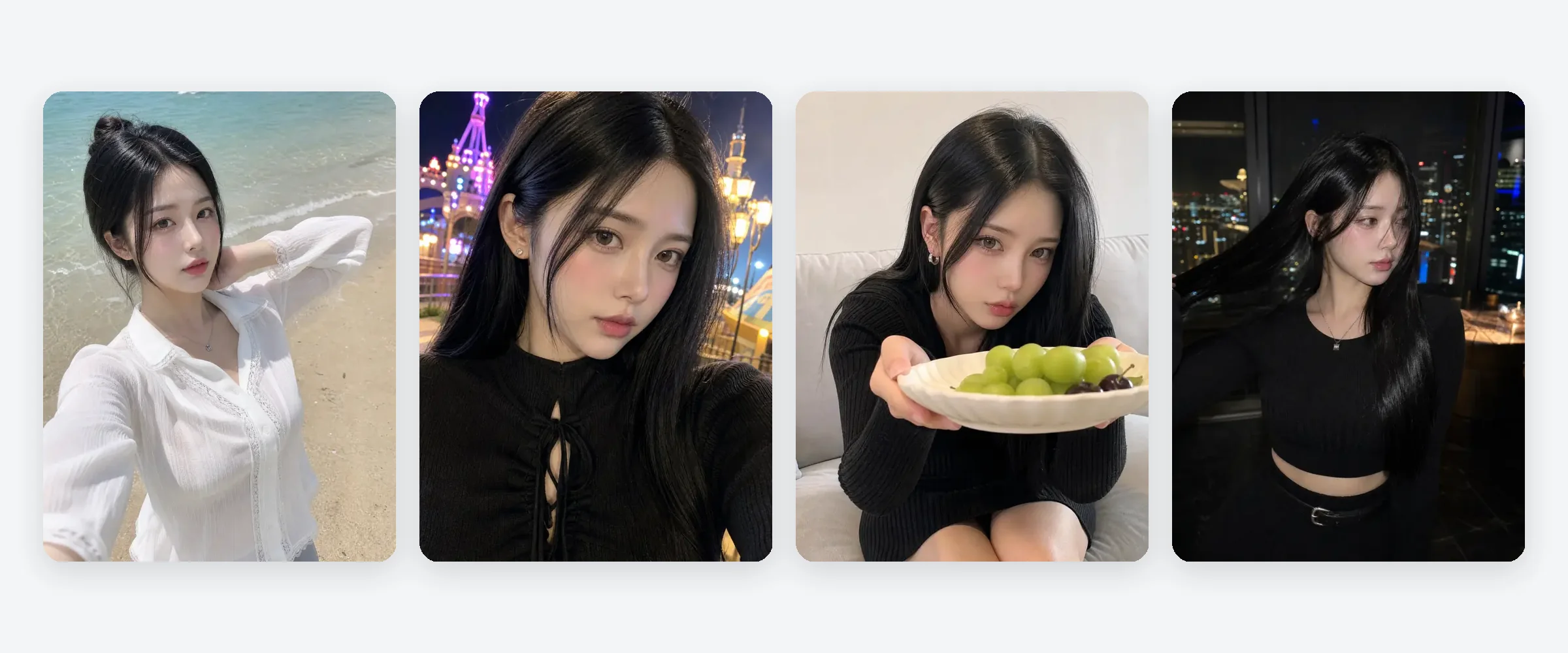
In those four, only the place changes; the face is one. The person in the photos doesn't exist. Getting this result used to mean hopping between several image generation tools and tuning prompts.
3. If you use LILIT. LILIT is an AI influencer studio built around making a character once and locking it in. The Create an AI Influencer screen takes three steps. Choose gender, age range, a first-impression vibe like puppy-like or cat-like, and hair. There is no text box. Next, pick one of the face candidates and give it a name. Last, the full body is completed from the face you picked, as it is. Every feed photo, lookbook, and video you make afterward comes out with this face, and no prompts are used. The screen-by-screen order is laid out in How to create an AI influencer — the complete guide (2026).
One of the two AI influencer accounts the LILIT team runs itself has been running this way for ten months. Picking only a mood, pulling four photos at a time, and choosing which of them to post takes about thirty minutes a day. At 30,000 followers it received a sponsorship offer by email from a travel agency, flights and hotel included.
Look around without signing up, and if you like it, start with a character4. Put up the AI label and run it every day. Following the Instagram rule described above, put the AI-generated label on the profile. Without the label the account isn't recommended to new users, so it's hard to grow. Our own account runs with AI influencer written in the profile, and the sponsorship offer came in that state too.
Frequently asked questions
Are virtual influencer and AI influencer the same thing?
Not quite. AI influencer mostly points at the individual accounts among them whose face and photos are AI-generated. To cover 3D characters and motion-capture idols as well, virtual influencer is the word to use, and virtual human is the broader one.
How can I check whether the person in a photo is a real person?
Check the profile. Since August 31, 2026, Instagram requires accounts fronted by an AI-generated person to carry the "AI-generated profile" label. Accounts without the label are left out of Reels and Explore recommendations, so an AI person's account that reaches you through recommendations most likely has the label on it.
Doesn't disclosing AI stop sponsorships from coming in?
It doesn't. The account described above received its sponsorship offer from a travel agency with AI influencer disclosed in the profile. What advertisers look at is the follower count and the response the feed gets.
Do I have to learn 3D graphics or prompt writing to start as an individual?
The studio-made type needs 3D graphics work, but the individual AI-type doesn't. The hard part of the individual AI-type is holding the same face. With a tool that locks the character in, you can go through it by choosing, with no prompts.
Can an individual earn like Rozy?
The scale is different. Rozy's $850,000 is the number for a case run by a studio with large advertisers attached. The revenue of an individual account is sponsorships and platform payouts.
All example results in this post are AI-generated images based on LILIT's exclusive AI model "Ko Eunchae (@o0neae)." Unauthorized reproduction, redistribution, or commercial use will be dealt with strictly under applicable law.